The comeback kit.
Nike TENS. Recovery for athletes that moves with you.
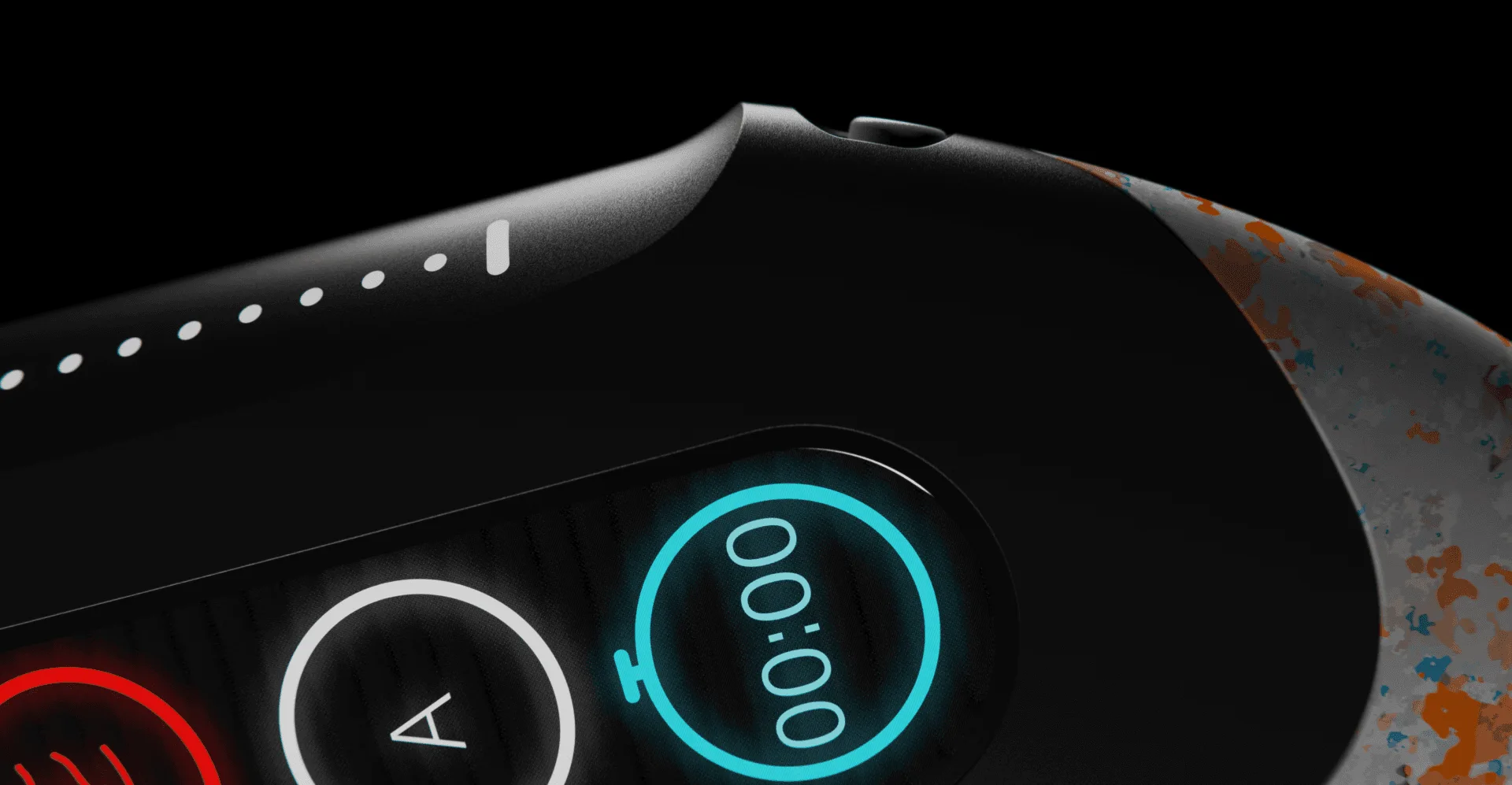
Nike wanted a TENS unit for athlete recovery, reusing an existing circuit board, so only the form and screen could change.
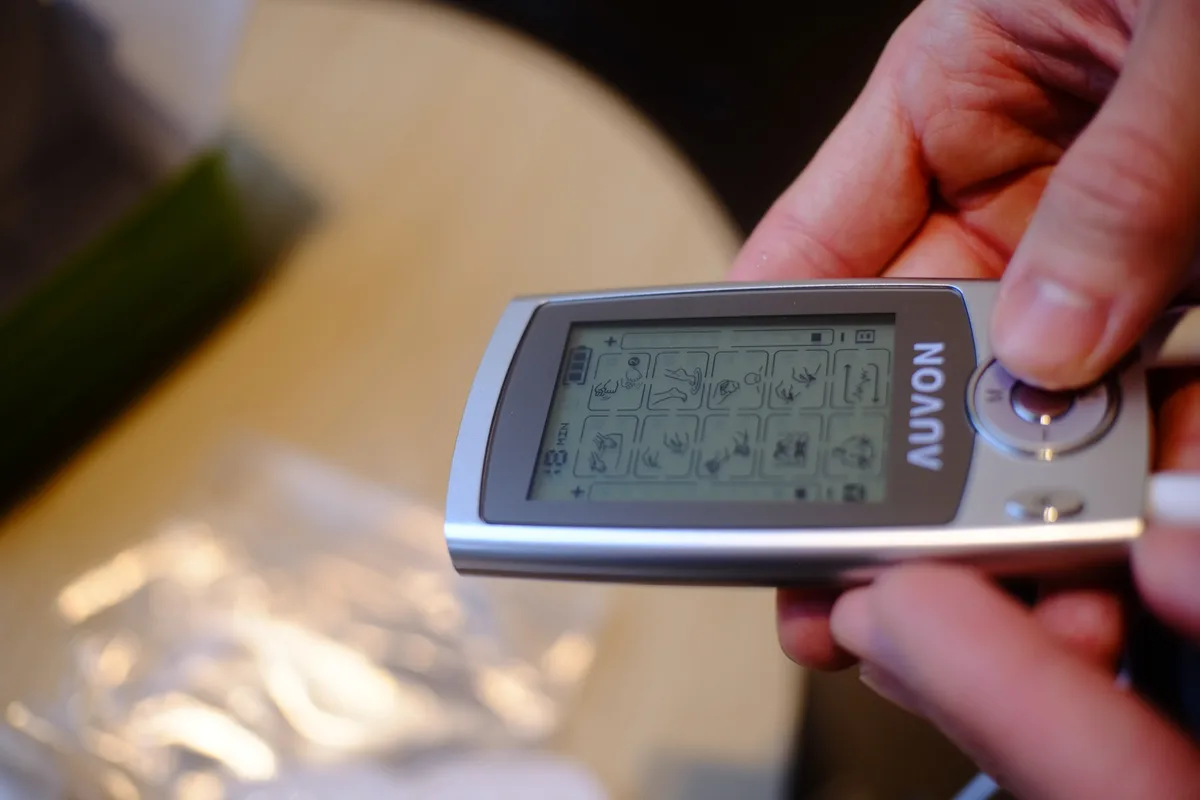
Current units are cheap and uncomfortable: confusing controls, unlabeled A/B cables, poor materials and packaging.
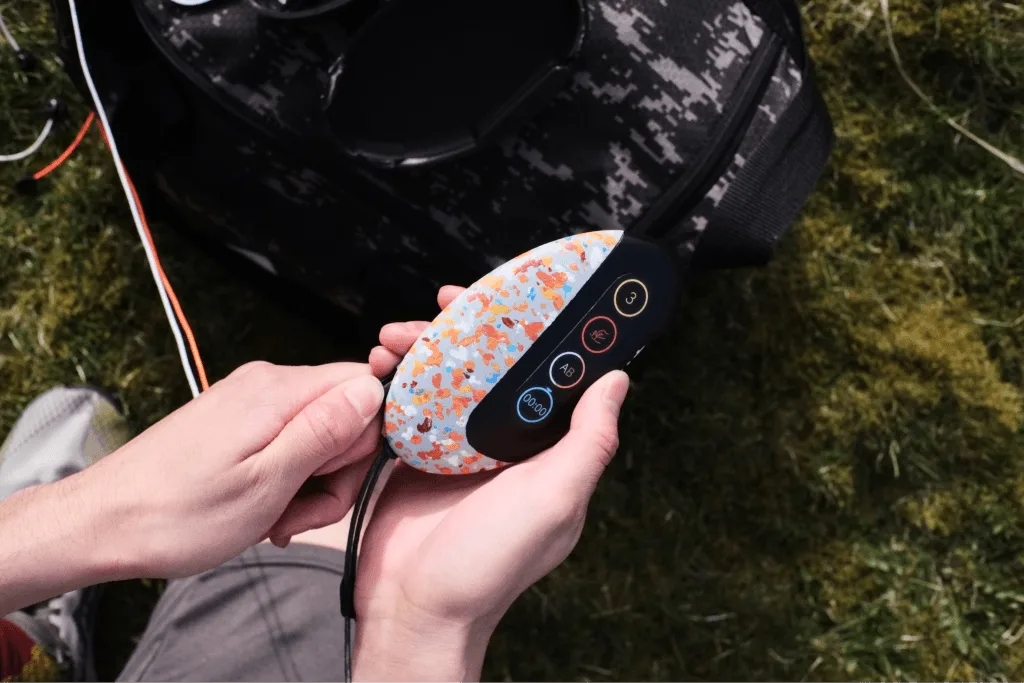
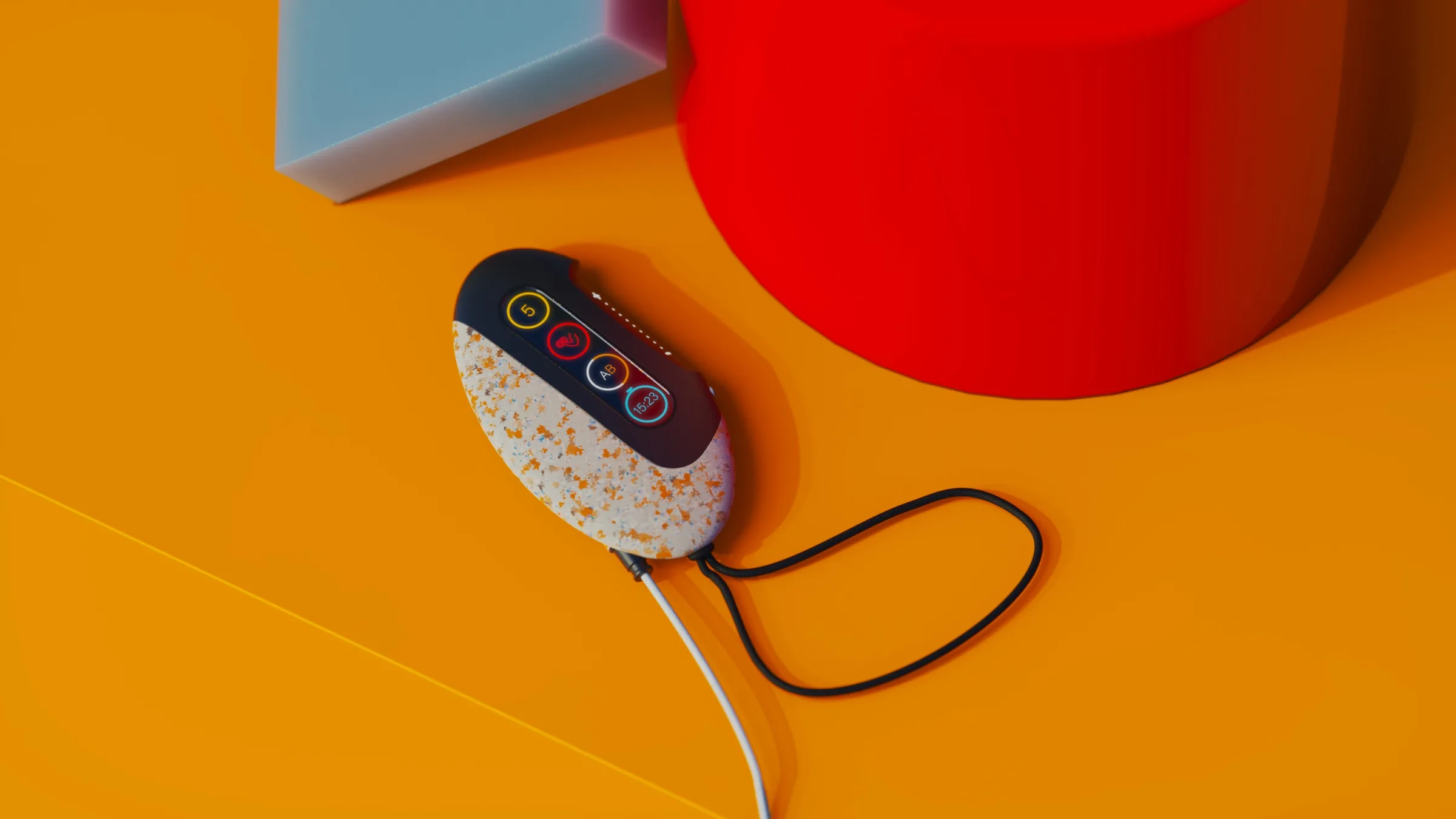
A soft, egg-shaped unit in Nike's recycled material, with a simple touchscreen, snap electrodes and a compact case.
What makes recovery devices hard to live with?
I took apart and observed current units, then framed the work around a lifestyle athlete: a 37-year-old triathlete using TENS during light exercise and mobility training after a knee injury.
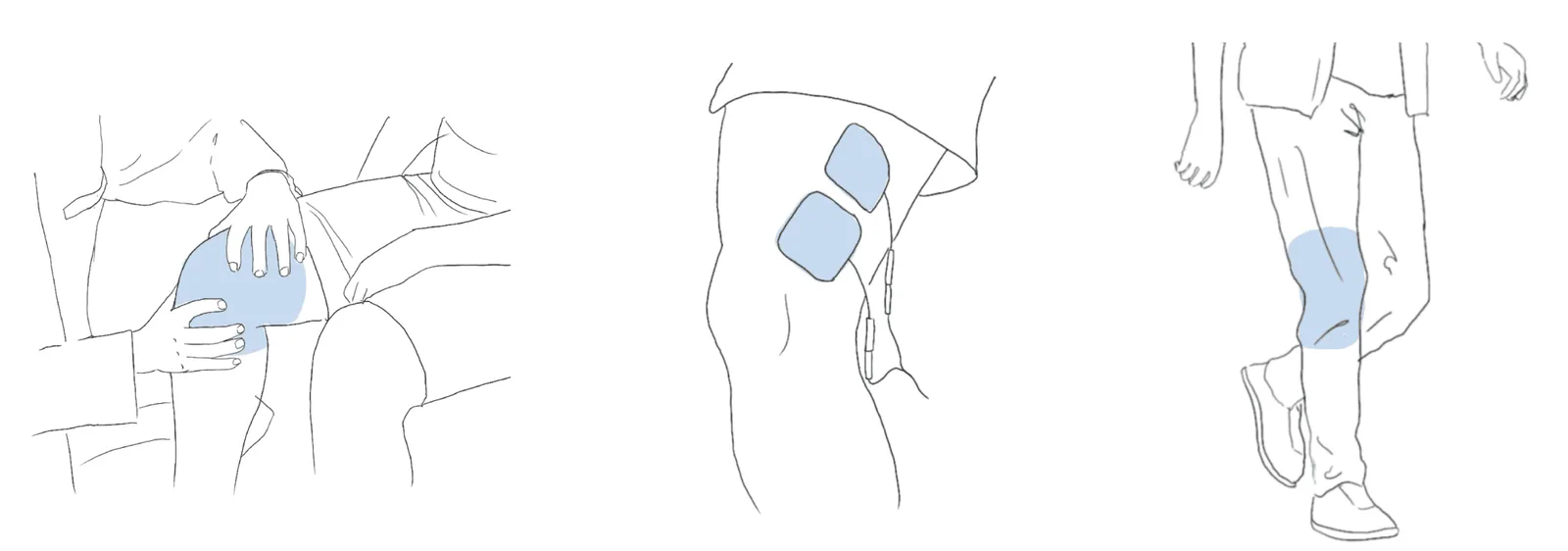
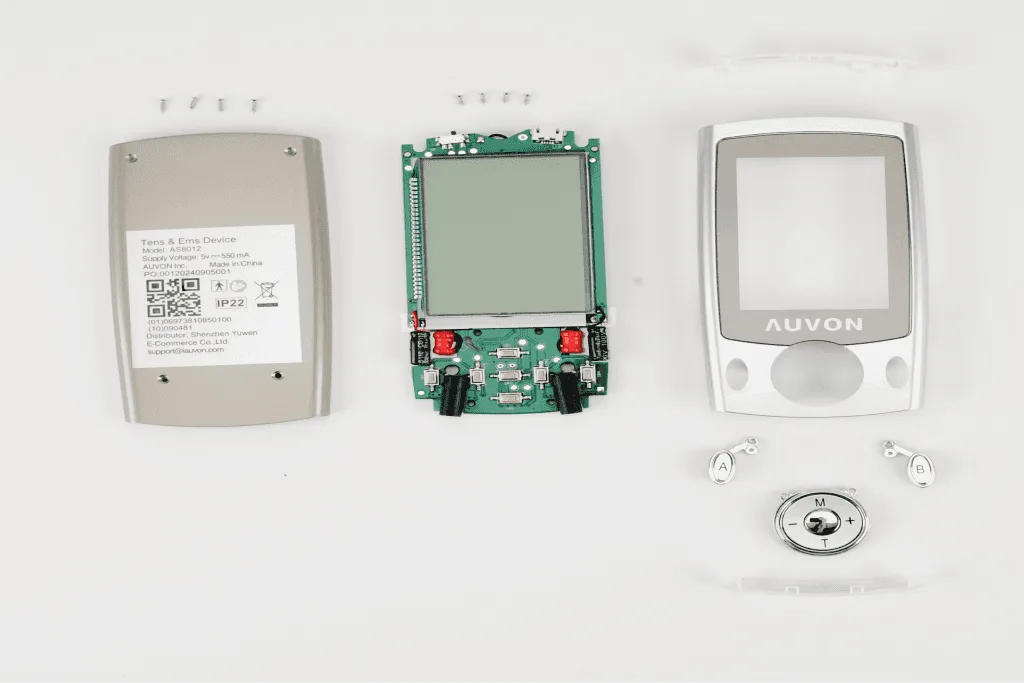
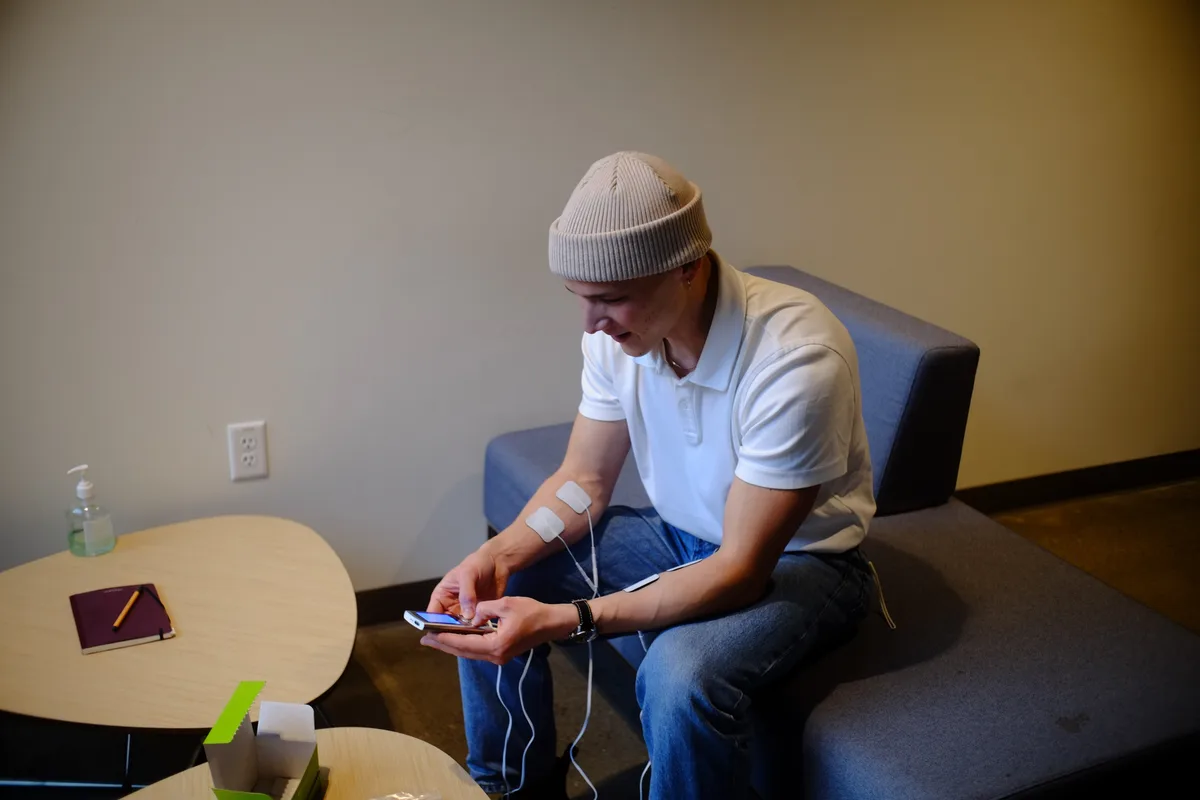
Lead with the hand, not the board
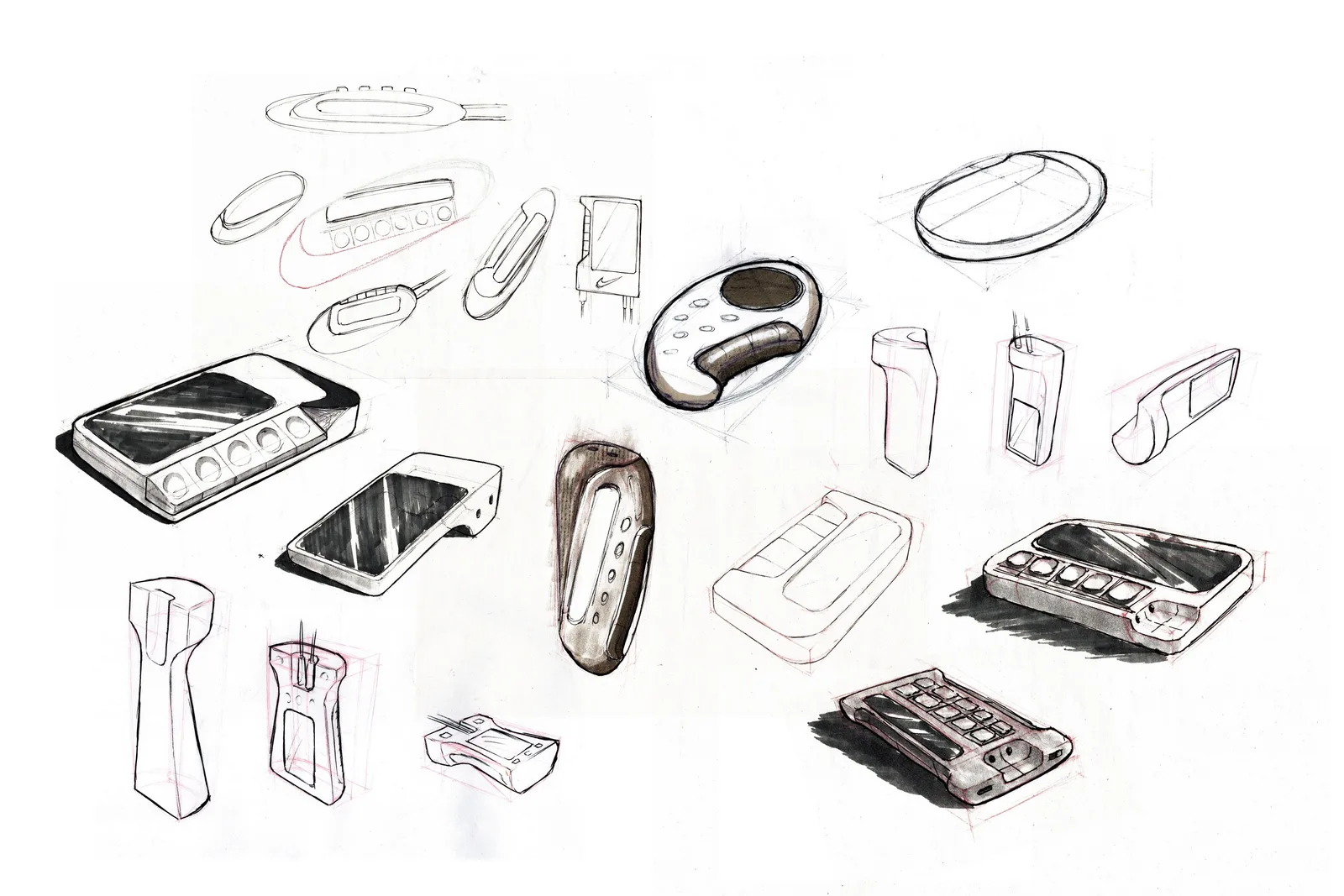
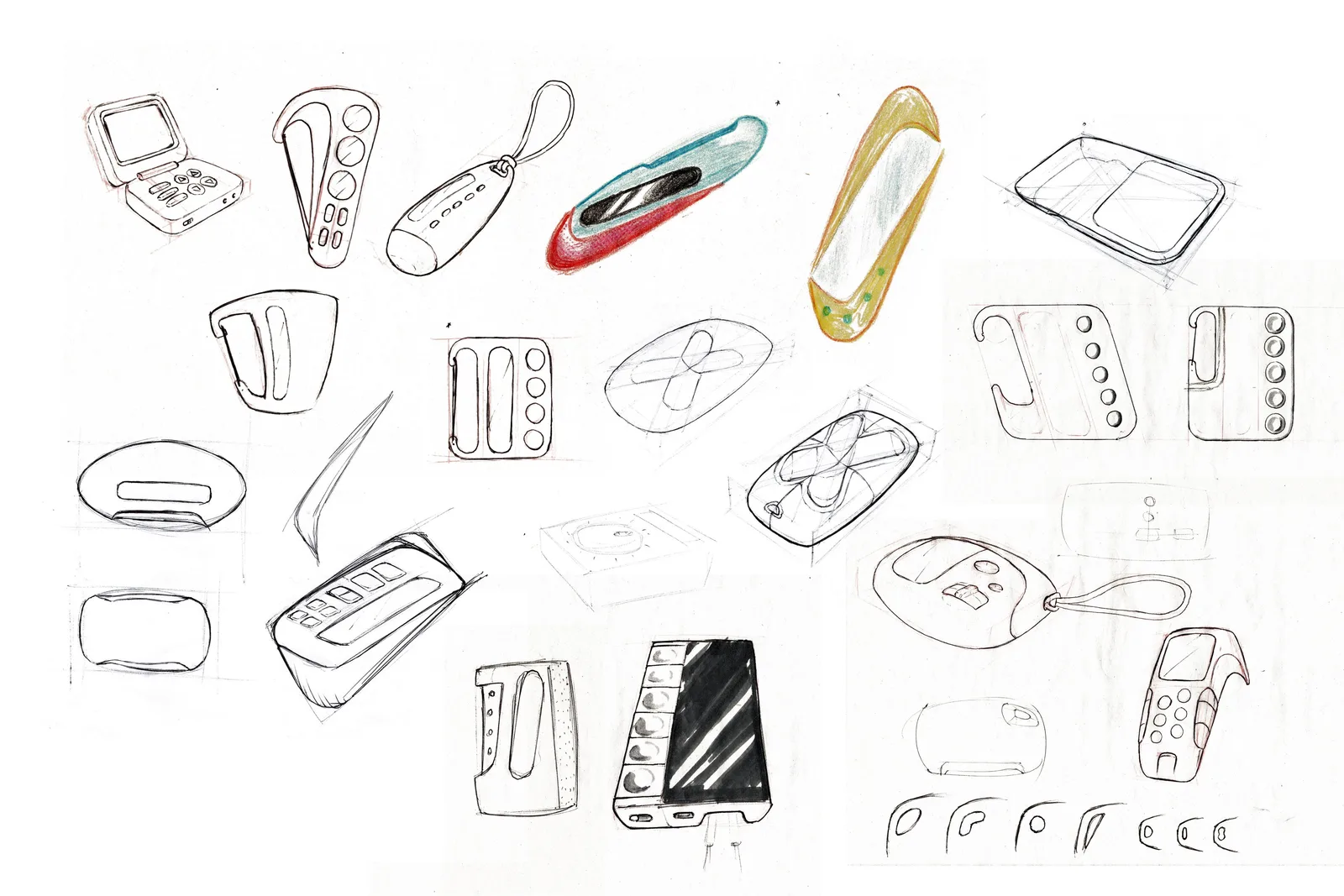
The fixed circuit board would dictate a boxy, rectangular form.
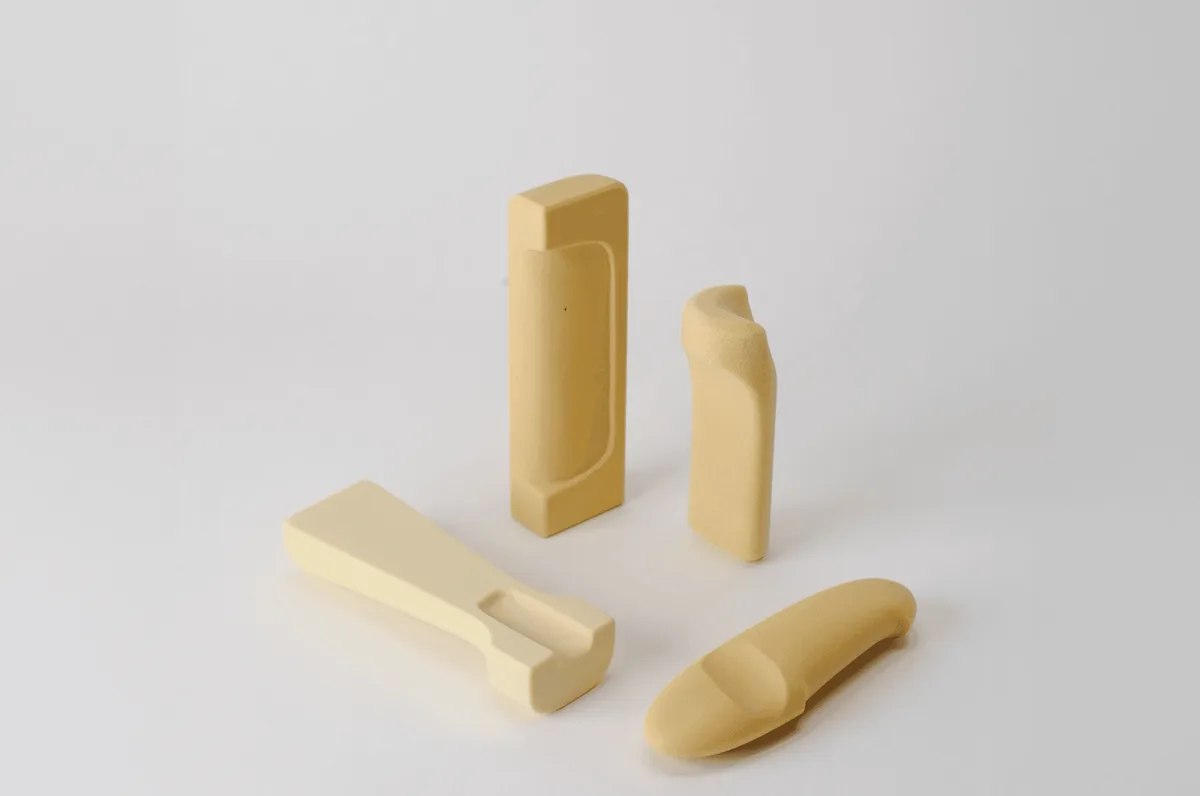
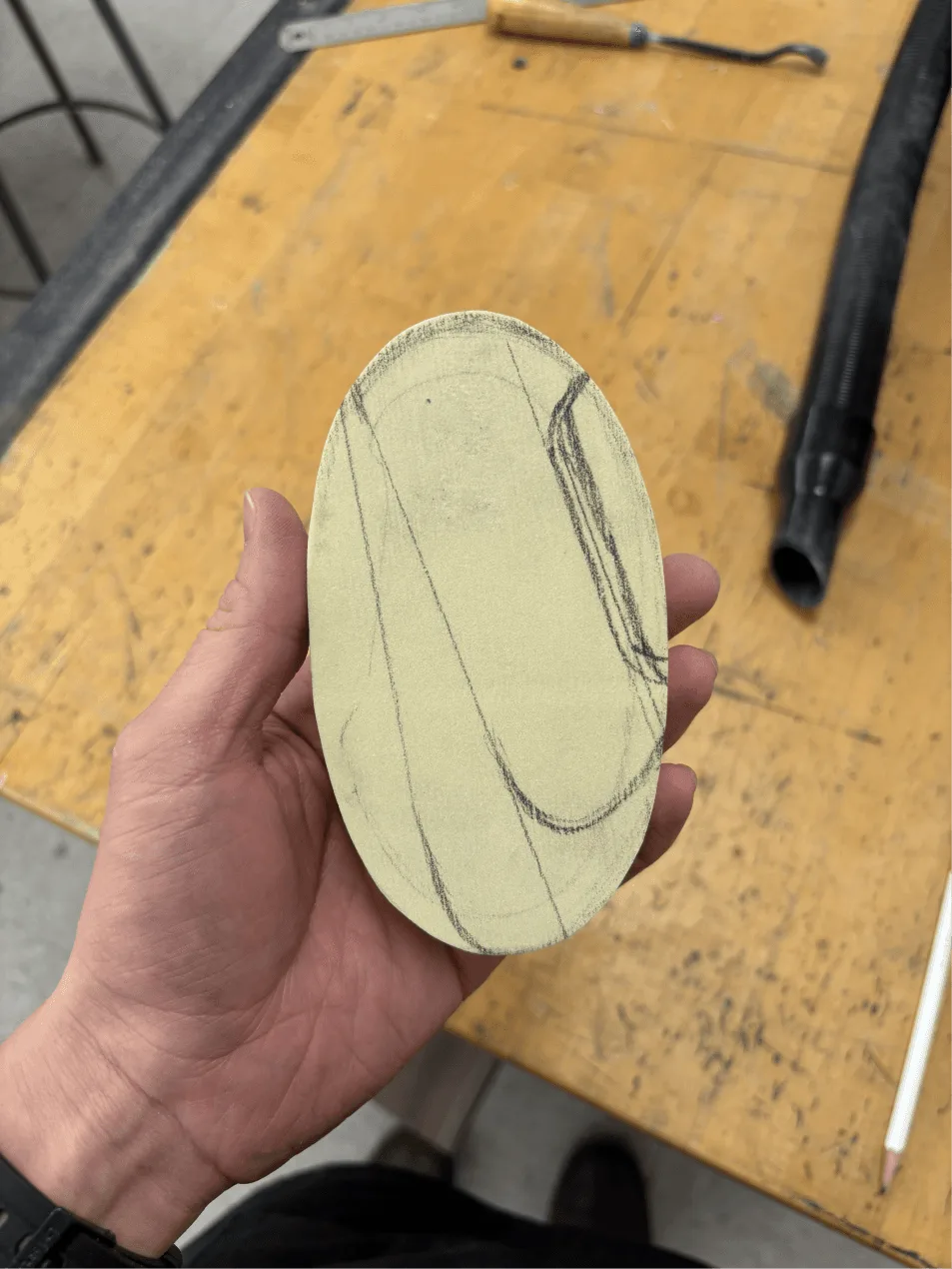
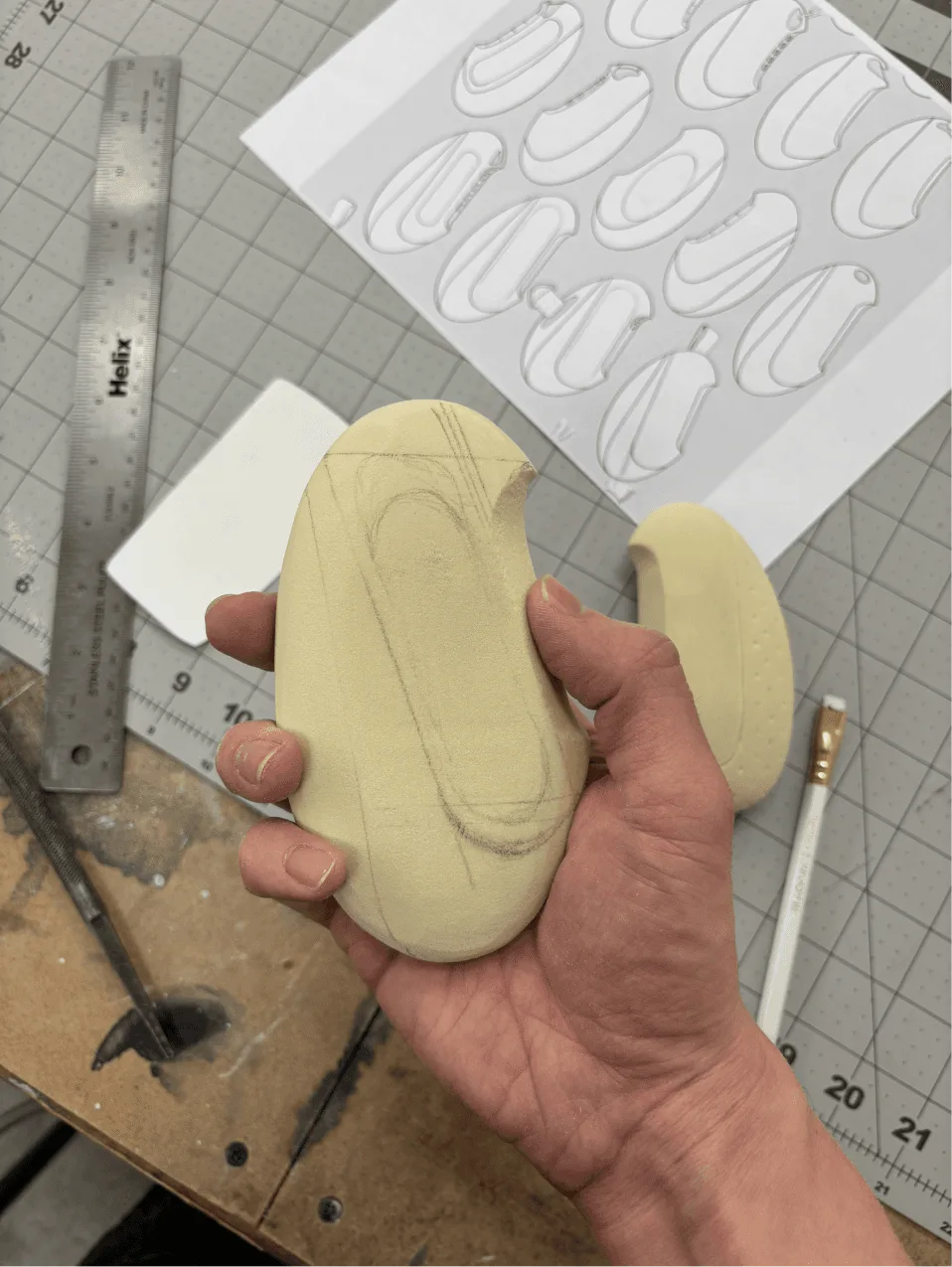
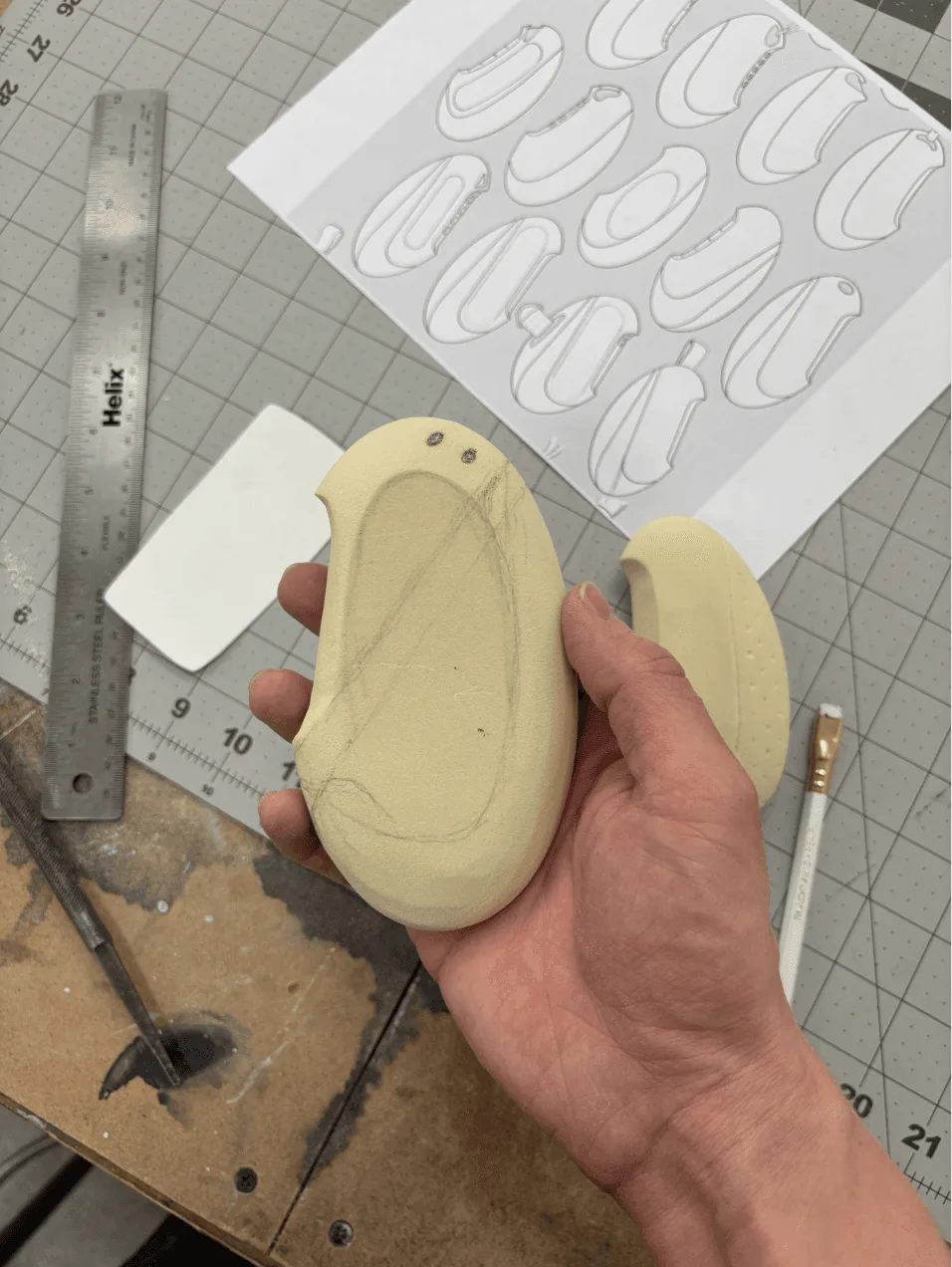
Abstract foam models showed the hand wanted a rounded, palm-filling grip.
Start with ergonomic discovery through model-making and form-finding sketches, then fit the board inside.
Final form is likely to be physically larger than current TENS units.
Universal ergonomics of a soft form
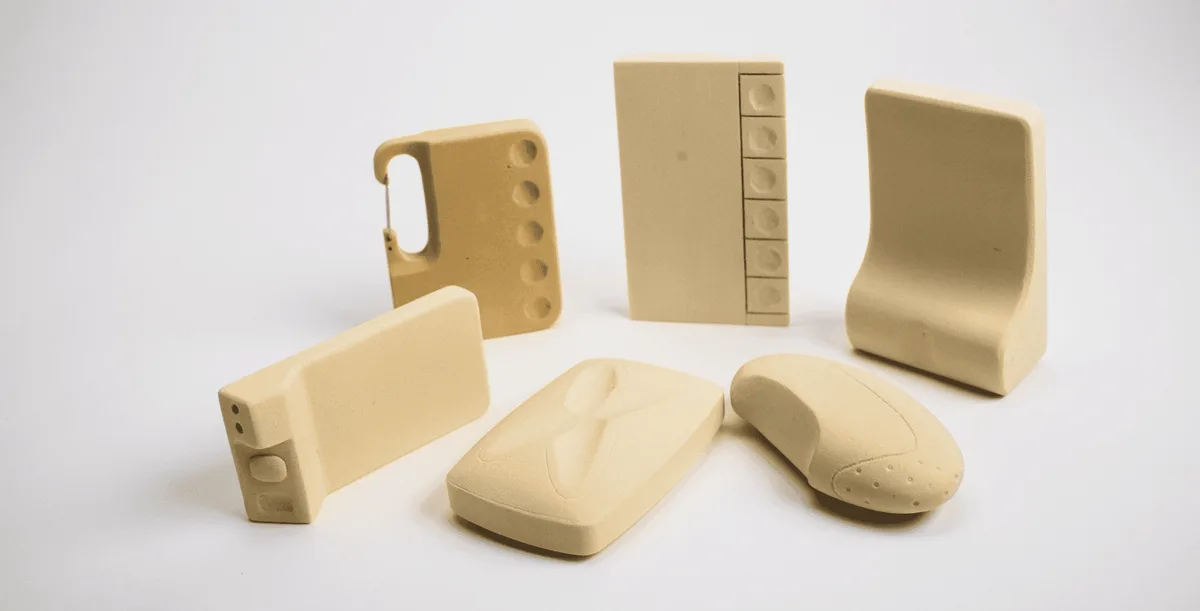
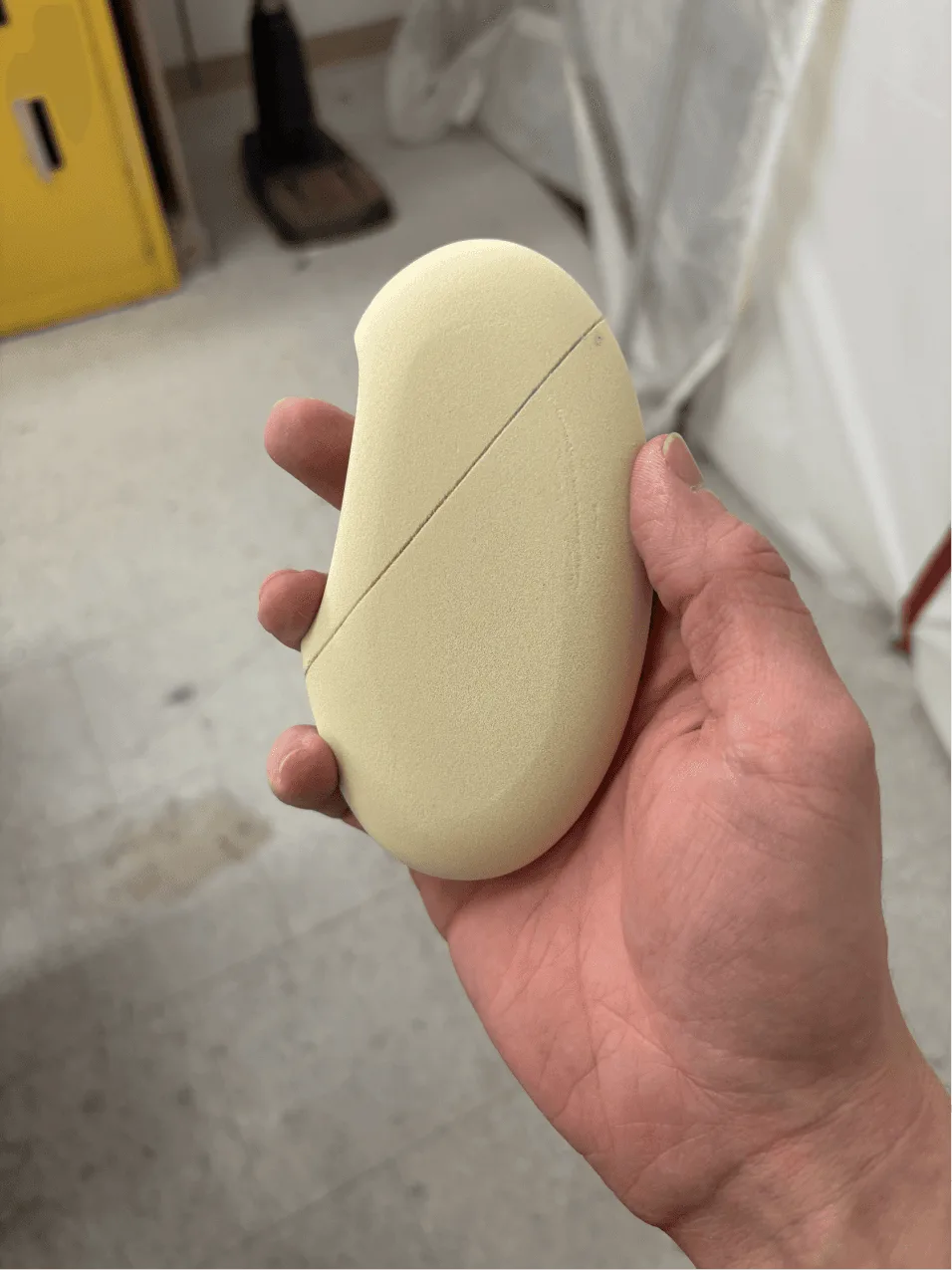
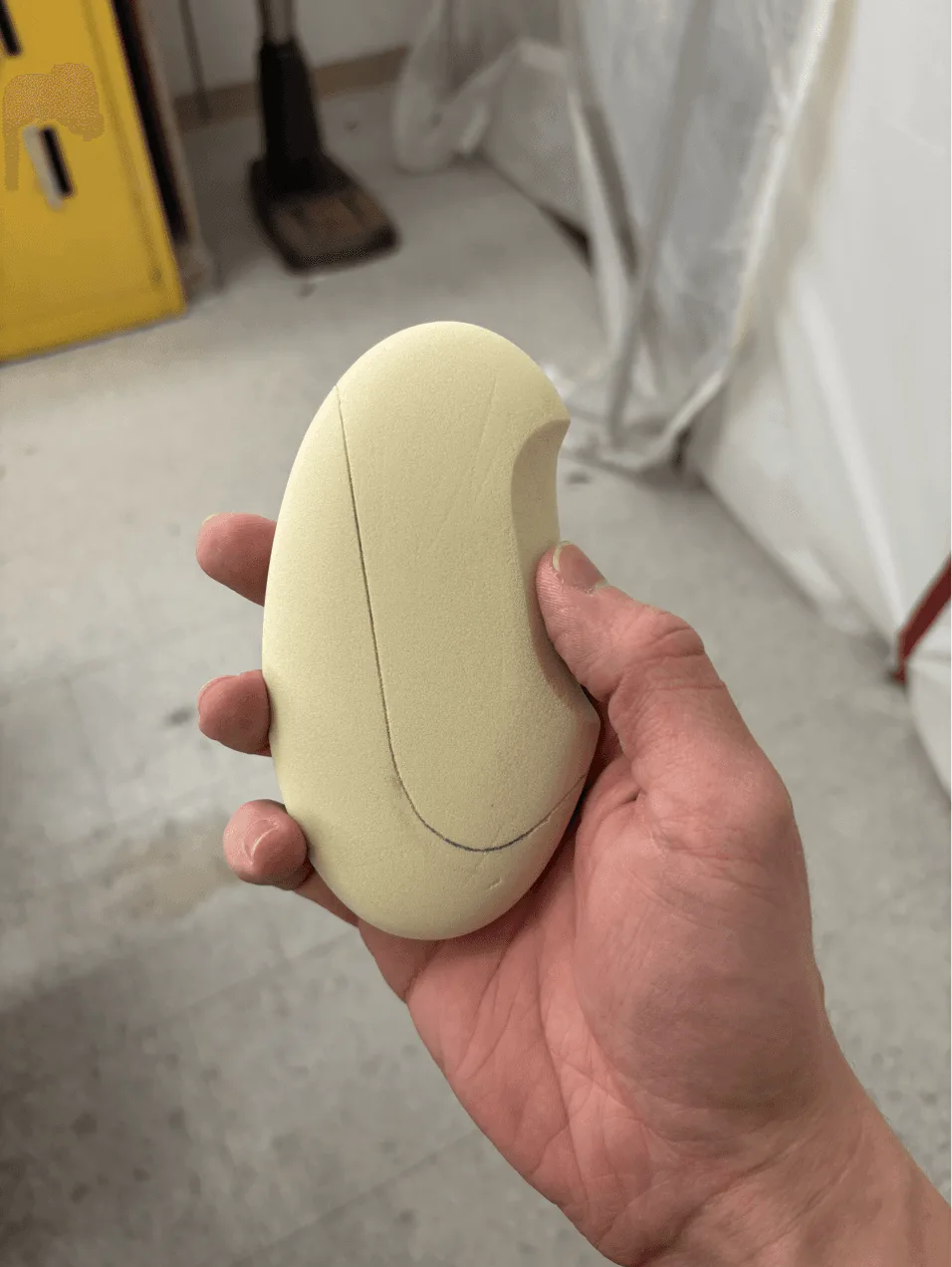
A clip-on or flat card would be the most portable.
A second round of models tested interactions and environment. The Egg represented the Nike brand best while staying ergonomically versatile.
Develop the Egg, then refine it through hand-held iterations.
[What the clip or card did better that the Egg gives up.]
Tie it to the rest of Nike's equipment
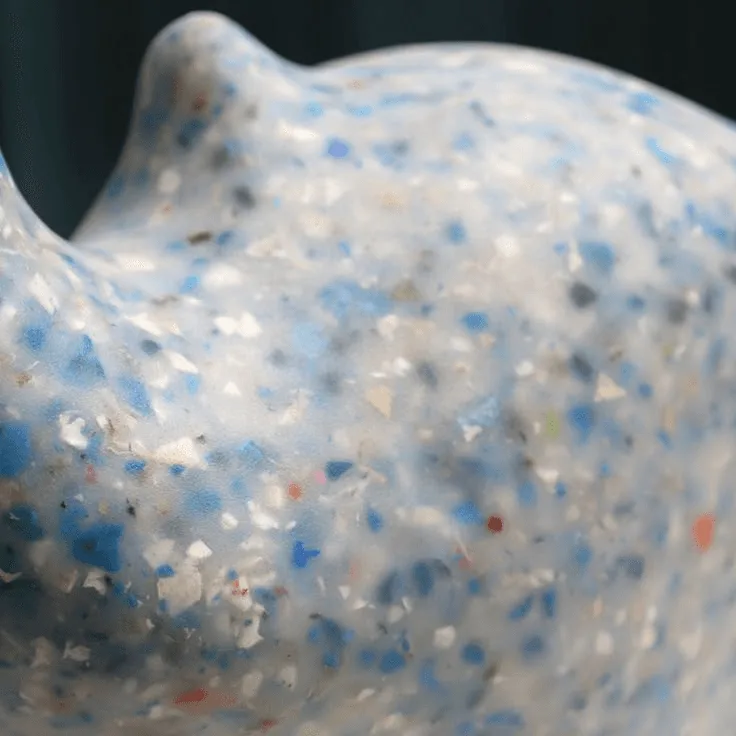
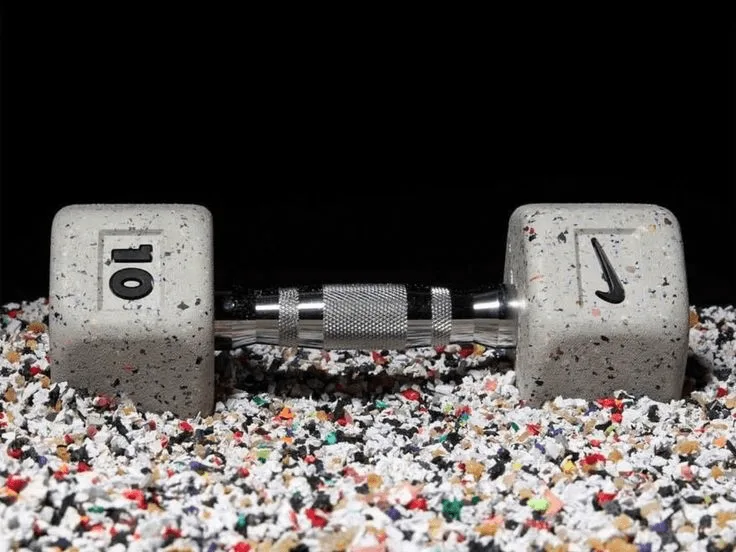
Nike's recycled plastics, already used on its dumbbells, connect an electronics product to the rest of its exercise goods and give the grip texture.
Fewer controls, clearer setup
A TENS unit needs a dense panel of buttons and modes.
Users found current controls confusing, and cables weren't labeled for A and B pairs.
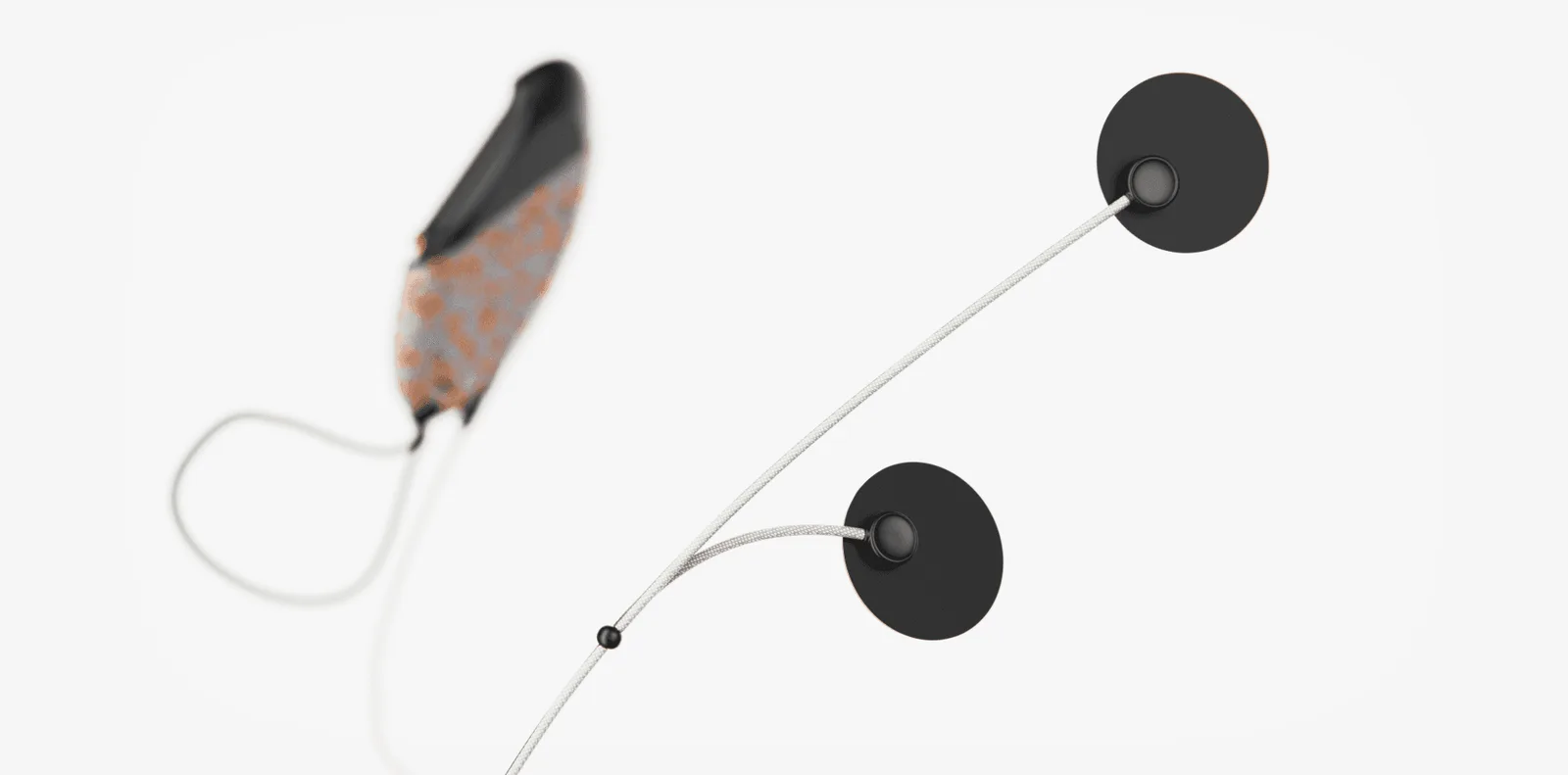
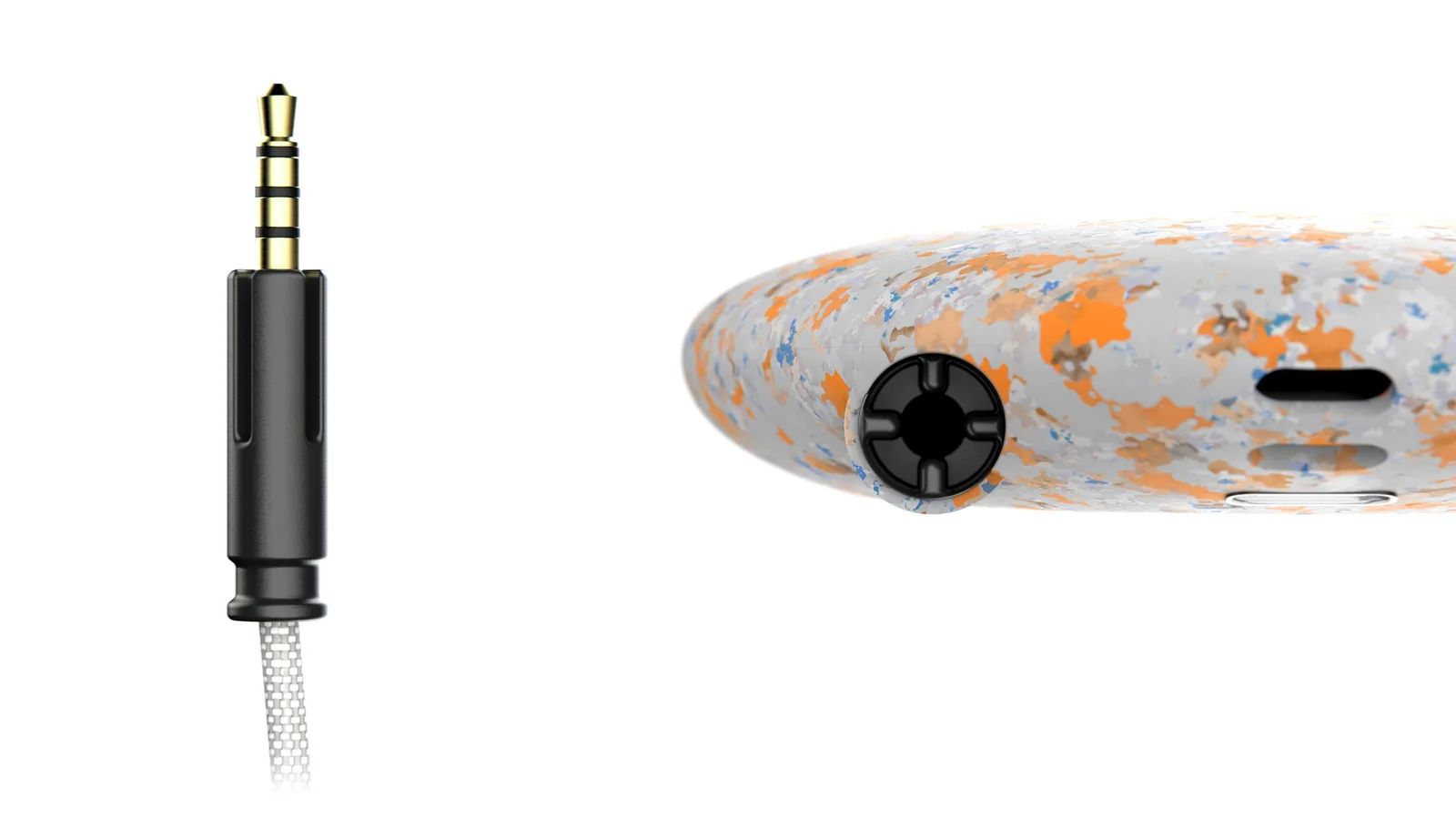
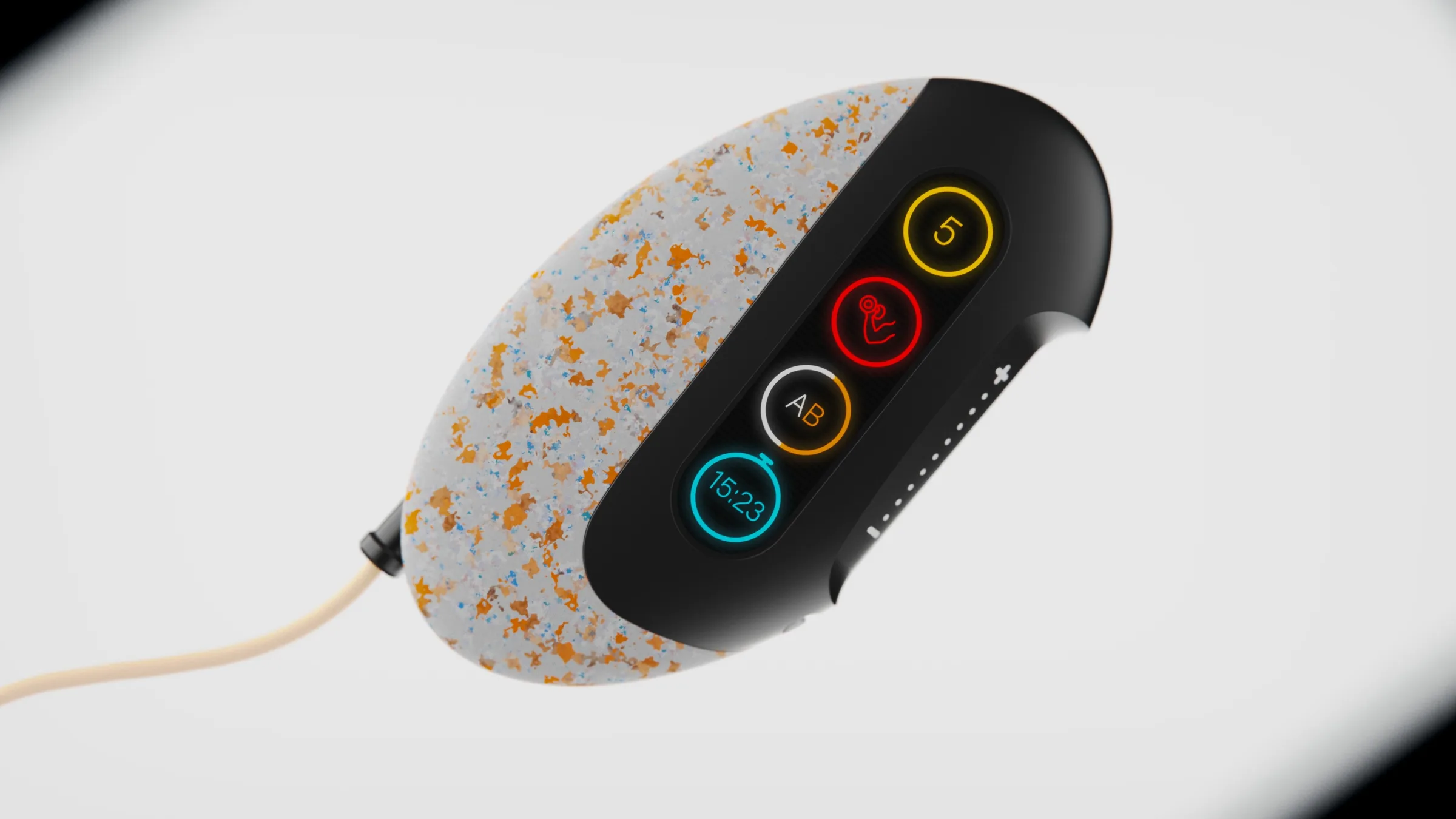
A simple touchscreen shows only key information, a capacitive slider dials intensity, and one keyed jack takes snap-on electrodes.
[e.g. fewer modes reachable without the screen.]
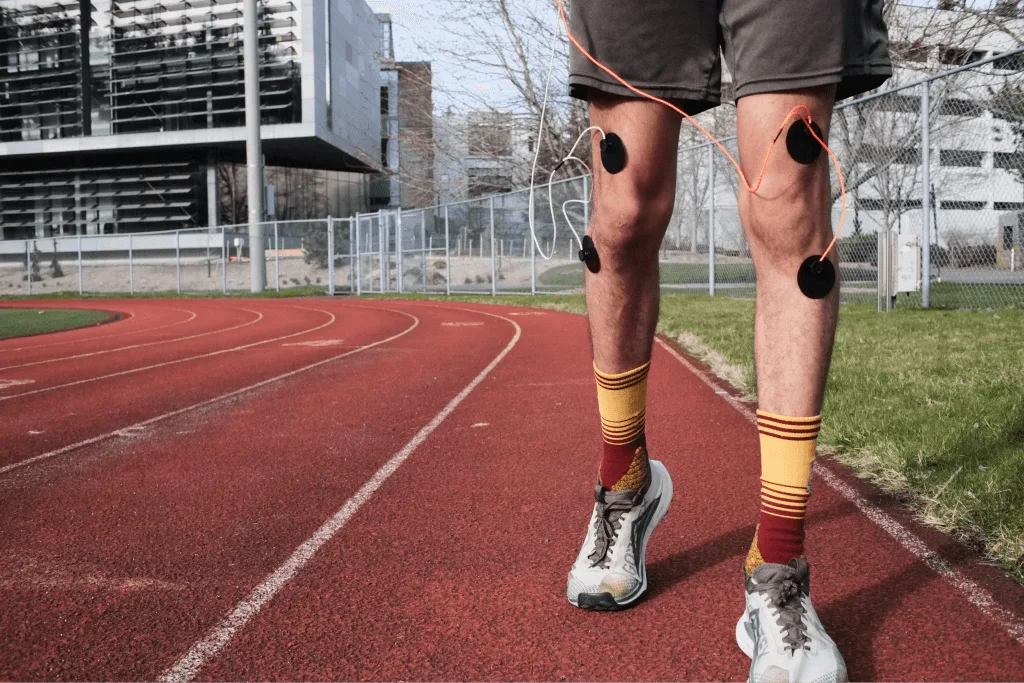
On the track, not in a drawer
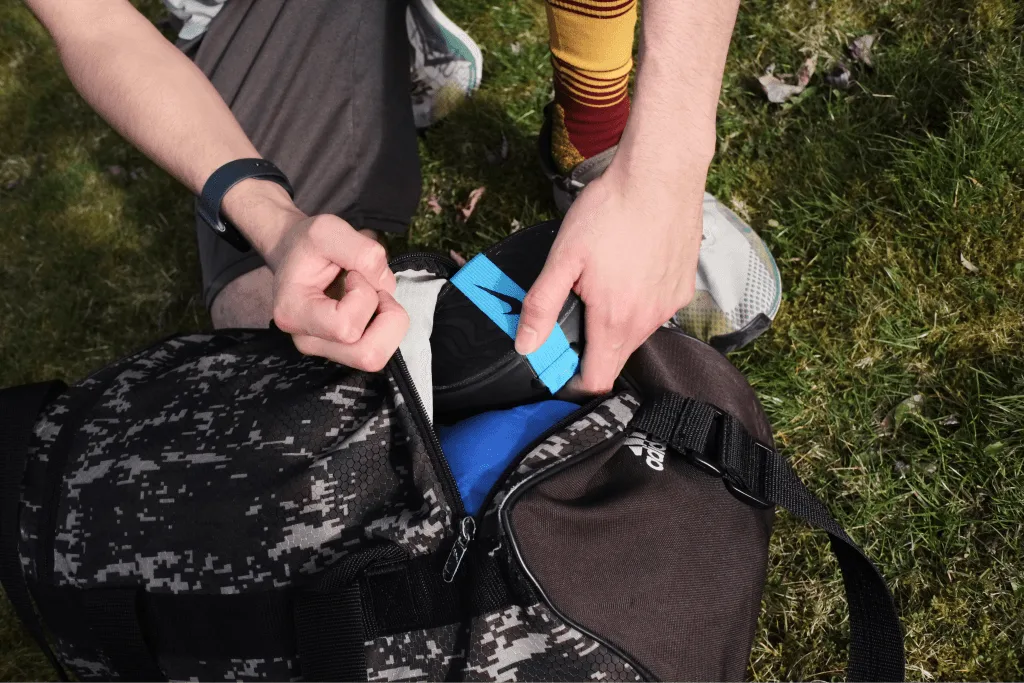
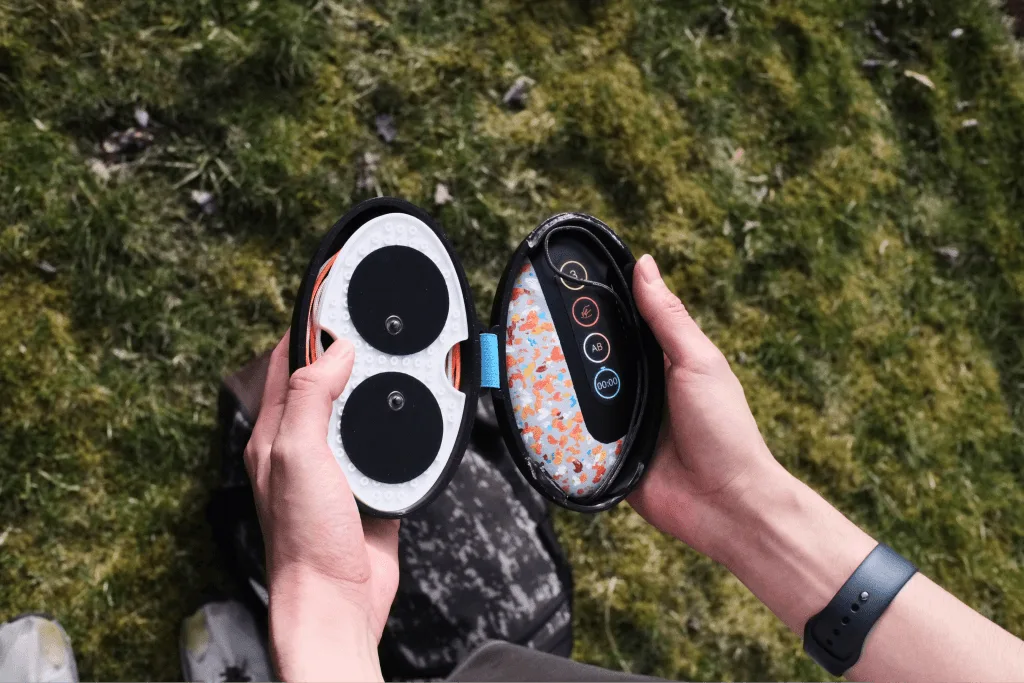
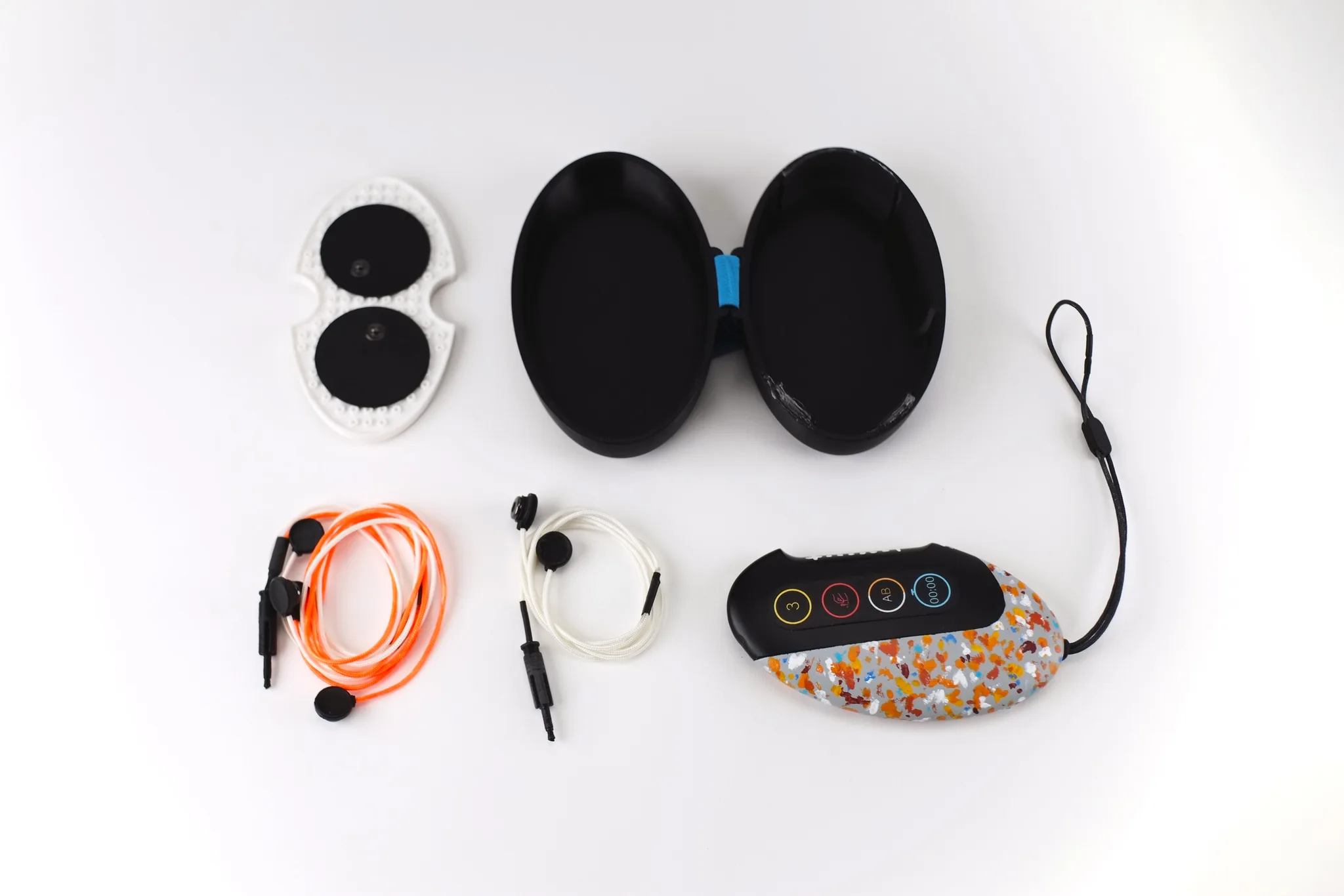
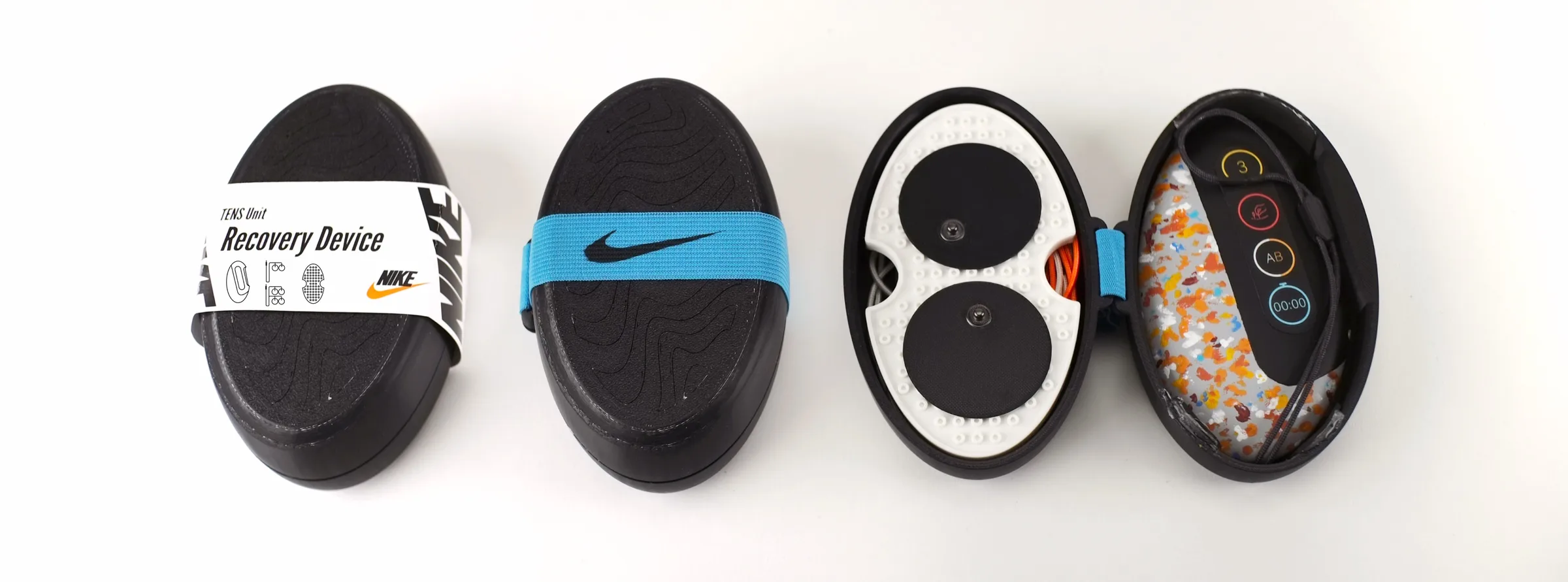
Everything packs into one case: unilateral and bilateral wires and an electrode saver. Color-coded wires show which side is being controlled, so setup stays simple in the middle of light exercise.
The Nike TENS Unit
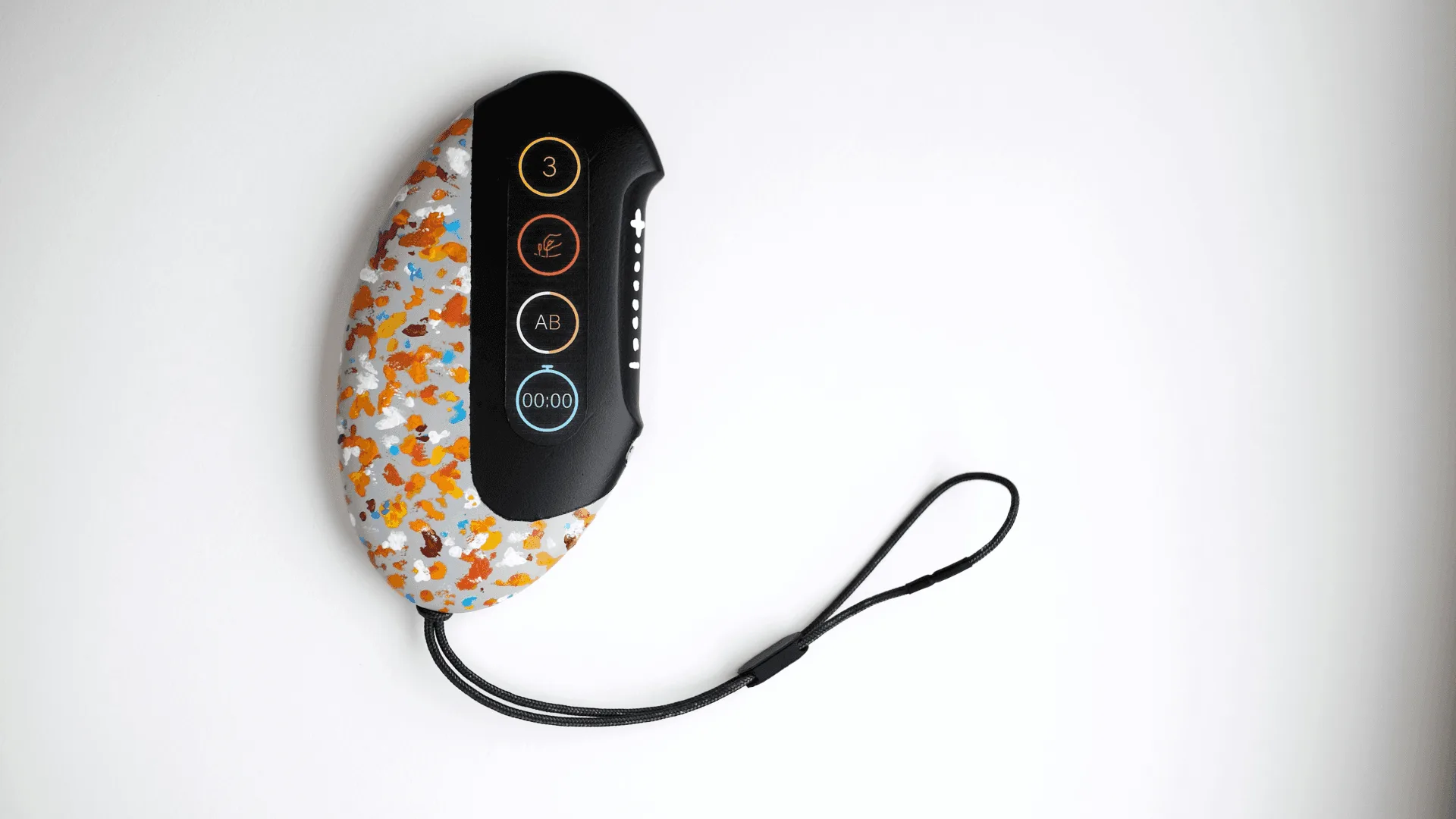
Overmolded in Nike's recycled materials.
The screen distills key information; a capacitive slider sets intensity.
Button snaps and one keyed jack make setup simple.
Unit, electrodes and leads packed together for light exercise.
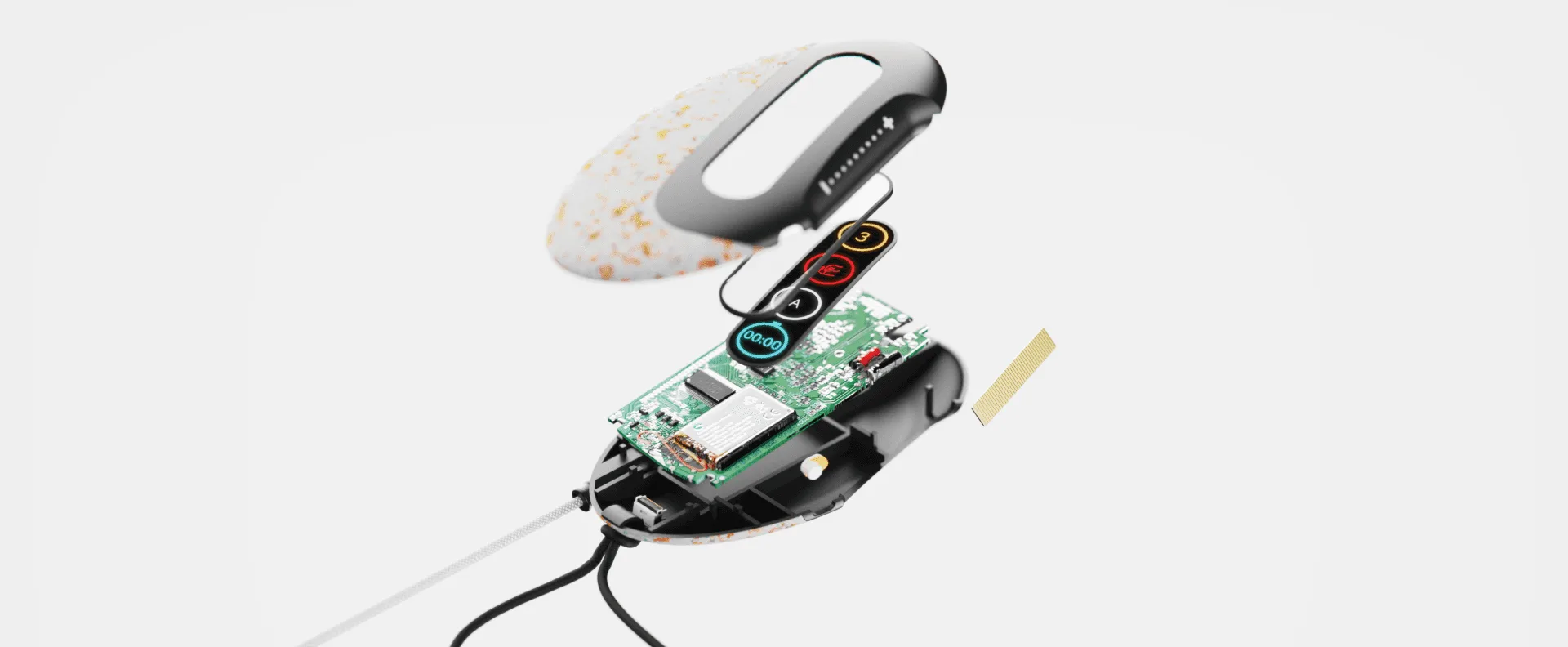
- Screen glass
- OLED displayKey information only
- Touch control stripCapacitive intensity slider
- Power switch
- Snap construction
- Overmolded textured gripNike recycled material
- PCBExisting board, unchanged
- Charging port
What I'd do next
- [A real limitation, e.g. the grip was validated on foam, not on a working unit.]
- [An engineering question, e.g. overmolding recycled plastic onto the housing.]
- [What you'd test next with athletes.]